


A
Adobe Acrobat
The industry-standard software we use to create, edit, and manage the PDF files for your notebook designs, ensuring accurate production.
Artwork
The digital files of your designs, logos, and text, which we’ll use to print and customise your notebooks.
B
Belly Bands
A paper band that wraps horizontally or vertically around your notebook, often used for branding, marketing messages, or to secure a pen. It’s a great way to add an extra touch of customisation.
Biodegradable
Refers to materials that can naturally decompose and return to the earth without harming the environment.
Blank Paper
Notebook pages completely free of any lines, dots, or grids, offering maximum freedom for sketching, drawing, or uninhibited note-taking.
Bleed
The extra margin of artwork that extends beyond the trim edge of your notebook pages or cover. This ensures that when the notebook is trimmed to its final size, there are no unprinted edges, resulting in a professional, edge-to-edge design.
Bookmark Ribbon
A fabric ribbon bound into the spine of your notebook, serving as a convenient marker for pages. Available in various colours to complement your brand.
Brass Die
A precisely engraved metal plate (usually brass) used in processes like debossing, embossing, and hot foiling. We create a custom brass die to achieve crisp, detailed impressions of your logo or design on your notebook covers.
C
Case Binding
A durable and high-quality binding method where the notebook’s pages are sewn together into a text block, which is then glued into a rigid cover (case). This creates a long-lasting, lay-flat notebook, often preferred for premium journals and planners.
CMYK
Stands for Cyan, Magenta, Yellow, and Key (Black). This is the standard four-colour printing process we use for almost all full-colour designs on your notebooks, as it allows us to reproduce a wide spectrum of colours.
Colour Separation
The process of breaking down your full-colour artwork into individual CMYK (Cyan, Magenta, Yellow, Black) plates. This is a crucial step in the printing process to ensure accurate colour reproduction for your notebook designs.
Crop Marks
Fine lines printed on the corners of your artwork that show us where to trim the paper or cover to its final size. They are essential for accurate cutting of your custom notebooks. Also known as Trim Marks.
Custom Pages
Pages within your notebook that are uniquely designed and printed to your specifications, beyond standard lines or grids. This could include branded introductory pages, calendars, or specific layouts tailored to your needs.
D
Deboss
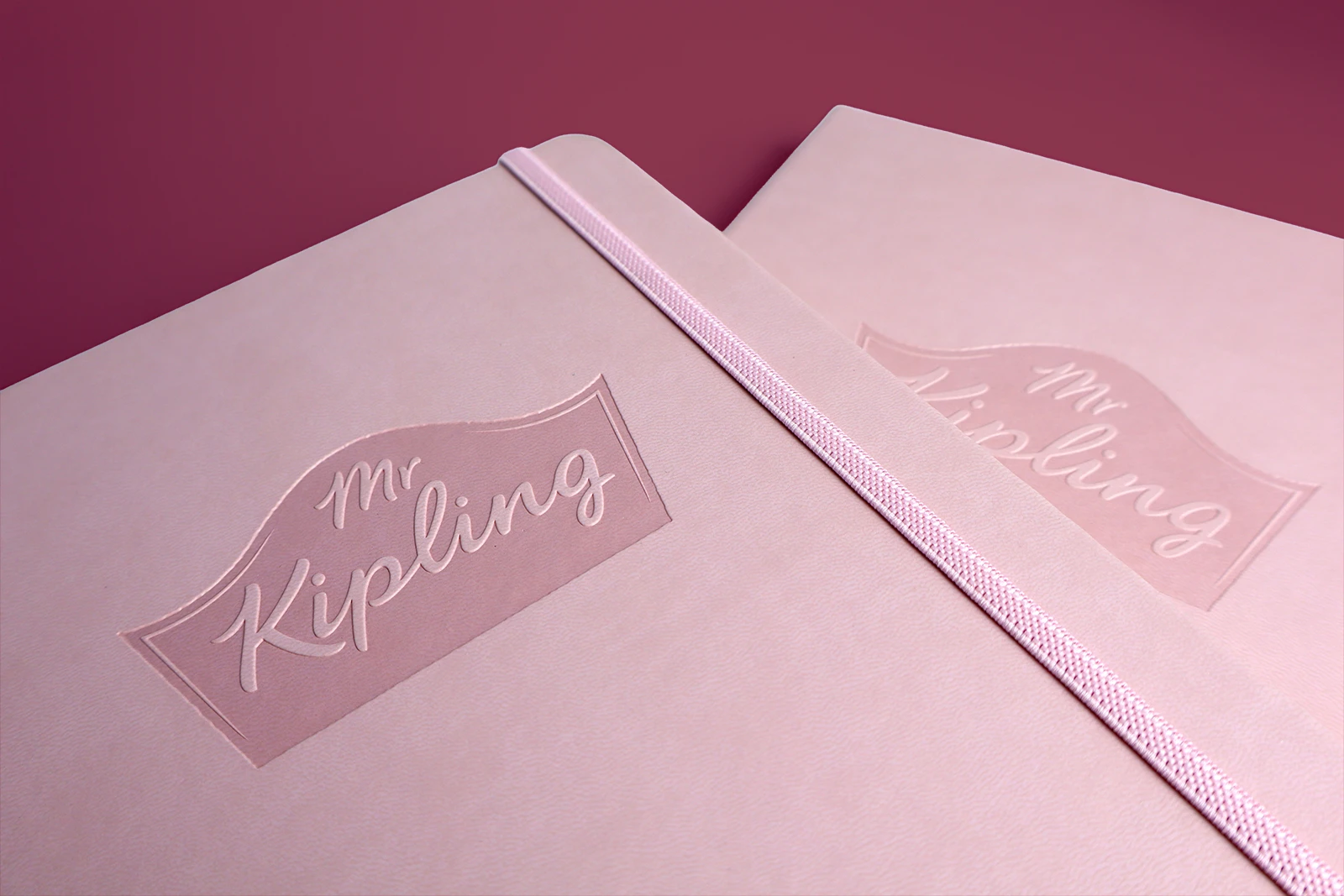
A pressing technique where a design or logo is pressed into the surface of your notebook cover, creating a recessed, tactile impression without ink. It offers a sophisticated and understated branding effect.
Die
A custom-made cutting tool used to create unique shapes or perforations in paper or cover materials.
Die Tape
Adhesive tape used to hold sections of a cutting die together, ensuring its integrity and accuracy during the cutting process for your custom notebook elements.
Digital Printing
A modern printing method that applies ink directly from a digital file onto the paper.
Dot Grid
Notebook pages featuring a subtle grid of dots rather than solid lines. This popular layout offers flexibility for both writing and drawing, providing guidance without being obtrusive.
Dwell
In hot foiling and debossing, dwell refers to the amount of time the heated brass die is pressed against the material. We carefully control dwell time to achieve the perfect impression and transfer of foil onto your notebook covers.
E
Eco Friendly
Materials and processes that have minimal negative impact on the environment. We strive to offer a range of eco-friendly paper stocks and production methods for your sustainable notebook choices.
Elastic Closure
A durable elastic band attached to the back cover of your notebook, designed to wrap around and keep the notebook securely closed when not in use. Available in various colours to match your branding.
Embossing
A pressing technique where a design or logo is raised above the surface of your notebook cover, creating a three-dimensional, tactile effect. It adds a premium and distinctive feel to your branding.
End Papers
The sheets of paper glued to the inside of the front and back covers of a case-bound notebook, connecting the cover to the text block. These can be custom-printed for an additional branding opportunity.
F
Foiling
The process of applying a thin layer of metallic or pigmented foil onto your notebook cover using heat and pressure. It creates a striking, reflective, and luxurious finish for your logo or design.
Four-Colour Process
See CMYK. The standard method we use to achieve full-colour printing on your notebooks by combining Cyan, Magenta, Yellow, and Black inks.
FSC Accreditation
Certification from the Forest Stewardship Council, indicating that the paper used in your notebooks comes from responsibly managed forests. We offer FSC-certified paper to support sustainable forestry.
Full-Colour Printing
The use of all four CMYK colours to reproduce a wide range of hues and photographic images on your notebook covers or pages. This allows for complex and vibrant designs.
Fully Printed Papers
Notebook pages that feature extensive, edge-to-edge printing of your custom designs, backgrounds, or patterns, transforming the interior of your notebook beyond simple lines or dots.
G
Gilding
The decorative application of gold or silver foil to the edges of your notebook pages, creating a luxurious and distinctive finish.
Gloss Finish
A coating applied to your notebook cover that provides a smooth, shiny, and reflective surface, enhancing colours and offering a vibrant look.
Grid Paper
Notebook pages featuring a series of intersecting horizontal and vertical lines, creating a square grid. Ideal for technical drawings, graphs, and structured note-taking.
GSM
Grams per Square Metre. This is the standard measurement of paper thickness and weight. A higher GSM indicates thicker, more substantial paper.
H
Hot Foiling
A specific type of foiling where a heated brass die is used to press metallic or pigmented foil onto the notebook cover, creating a crisp and permanent impression. It’s our preferred method for high-quality foiled designs.
L
Laser Engraving
A precise technique using a laser to etch your design directly onto the surface of your notebook cover (common on materials like wood, leather, or PU), creating a detailed and permanent impression.
Lead Time
The total amount of time required from the moment your order is confirmed and proof approved, to the delivery of your finished custom notebooks.
Letterpress
A traditional printing method where raised type or a design is inked and then pressed into the paper, creating a debossed, tactile impression. It offers a classic and artisanal look for your notebook covers or specific page elements.
Lined Paper
The most common notebook page format, featuring horizontal lines to guide your writing and keep notes neat and organized.
M
Matt Finish
A coating applied to your notebook cover that provides a smooth, non-reflective, and understated surface. It offers a sophisticated and tactile feel.
Monogramming
The personalization of your notebook with initials or a small decorative motif, often achieved through debossing, foiling, or laser engraving, adding a unique touch.
MOQ (Minimum Order Quantity)
The smallest number of custom notebooks we can produce for a specific order. This helps us ensure efficient production and competitive pricing.
P
Pagination
The numbering of pages in your notebook.
Pantone
A standardised system of colour matching used by printers worldwide. We use Pantone colours to ensure precise and consistent brand colours on your notebooks, especially for spot colour printing.
Pantone Matching System (PMS)
The proprietary system for colour standardization by Pantone LLC. We use the PMS to communicate and reproduce exact spot colours for your notebook designs, ensuring brand consistency.
Portable Document Format. PDFs retain the integrity of your design, fonts, and colours, ensuring accurate printing of your notebooks.
Perfect Binding
A binding method where the notebook pages are stacked, roughened along the spine, and then glued together with a strong, flexible adhesive. A cover is then wrapped around and adhered to the spine. It’s a common and cost-effective binding for thicker notebooks.
Perforated Pages
Pages within your notebook that have a line of small holes, allowing them to be cleanly and easily torn out without damaging the rest of the notebook. Ideal for tear-out notes or forms.
An expandable pocket, usually made from cardstock, glued to the inside back cover of your notebook. Perfect for storing loose notes, business cards, or small documents.
Pre-Production Sample
A physical sample of your custom notebook produced before the main print run. This allows you to review and approve all aspects of the design, materials, and finishes to ensure your complete satisfaction.
Print Run
The total quantity of notebooks printed in a single production order.
Print Spec (Print Specification)
A detailed document outlining all the technical requirements for printing your custom notebooks, including paper type, size, colours, binding, and finishing options.
Proof Approval
Your formal authorisation, typically after reviewing a digital or physical proof, that the artwork and specifications for your custom notebooks are correct and ready for production.
PU
Polyurethane. A synthetic material often used as an alternative to leather for notebook covers. It offers durability, a consistent finish, and is available in various textures and colours.
R
Reprint
A subsequent production run of the exact same custom notebook design, often ordered when initial stock runs low.
Resolution
The clarity and detail of an image or graphic, measured in dots per inch (DPI).
RGB
Red, Green, Blue. The colour model used for digital displays (screens). While your artwork may be created in RGB, we will convert it to CMYK for printing your notebooks, as CMYK is the standard for print.
S
Saddle Stitched
A binding method where folded sheets of paper are nested together and then stapled through the fold line along the spine. It’s suitable for thinner notebooks or booklets with fewer pages.
Secret Pad
A small, removable, notepad discreetly placed within the pocket of your custom notebook, offering an additional, hidden space for notes.
Singer Sewn
A binding method where the notebook pages are sewn together along the spine using a sewing machine, creating a visible stitched spine. This offers a distinctive, handcrafted, and durable finish.
Single Colour Printing
Printing using only one ink colour, typically black, but can be any Pantone spot colour. This is a cost-effective option for minimalist designs or branding.
Soft Touch Matt Lamination
A premium matt laminate applied to your notebook cover that provides a smooth, velvety, and luxurious tactile feel. It also offers added durability and protection.
Spiral Binding
A binding method where a continuous coil of plastic or metal is threaded through punched holes along the edge of the notebook pages and cover. This allows the notebook to lie completely flat when open.
Spot Colour
A pre-mixed ink colour (often a Pantone colour) used in printing, rather than being created by mixing CMYK inks. Spot colours ensure precise brand colour matching and are often used for logos or specific branding elements on your notebooks.
T
Trim Size
The final, cut dimensions of your finished notebook pages or cover after all excess material has been trimmed away.
Turnaround Time
The time it takes from final proof approval to when your custom notebooks are ready for shipping or collection.
Two-Colour Printing
Printing using two distinct ink colours, often a combination of black and a specific spot colour, or two spot colours. This allows for more visual interest than single-colour printing while remaining cost-effective.
Typeface
The design of a set of characters, including letters, numbers, and punctuation. Choosing the right typeface is crucial for the aesthetics and readability of your custom notebook’s printed content.
U
Uncoated Paper
Paper that has not been treated with a coating, resulting in a slightly textured, porous surface that absorbs ink. It offers a natural, tactile feel and is often preferred for a more organic or rustic aesthetic.
UV Digital Printing
A digital printing method that uses UV-curable inks. These inks are exposed to ultraviolet light immediately after printing, causing them to cure instantly. This allows for printing on a wider range of materials and offers vibrant, durable results for your notebook covers and specialised printing.
V
Vector Graphic
A type of digital image that uses mathematical equations to define lines, curves, and shapes. Unlike raster images, vector graphics can be scaled to any size without losing quality, making them ideal for logos and illustrations on your notebooks.
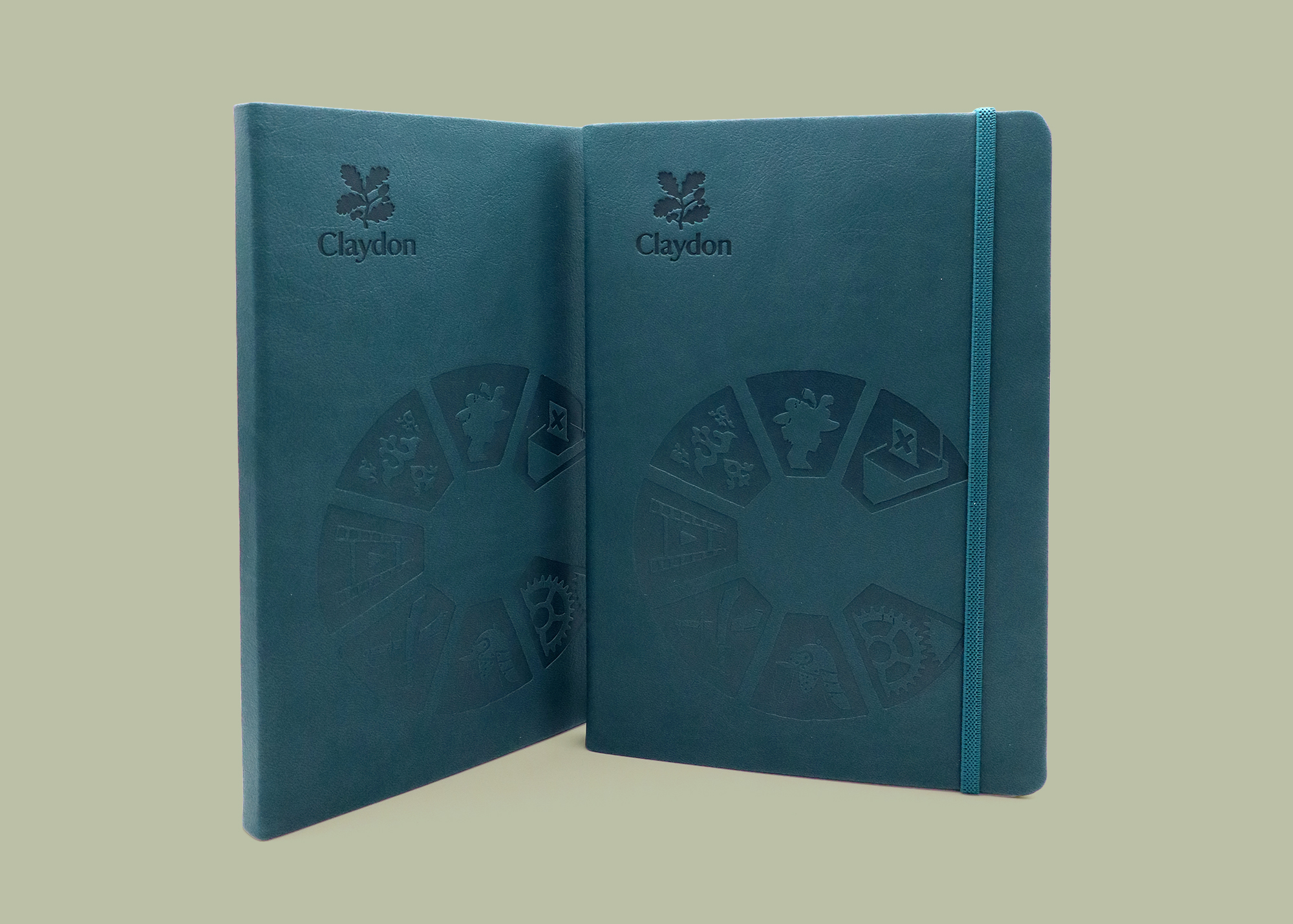
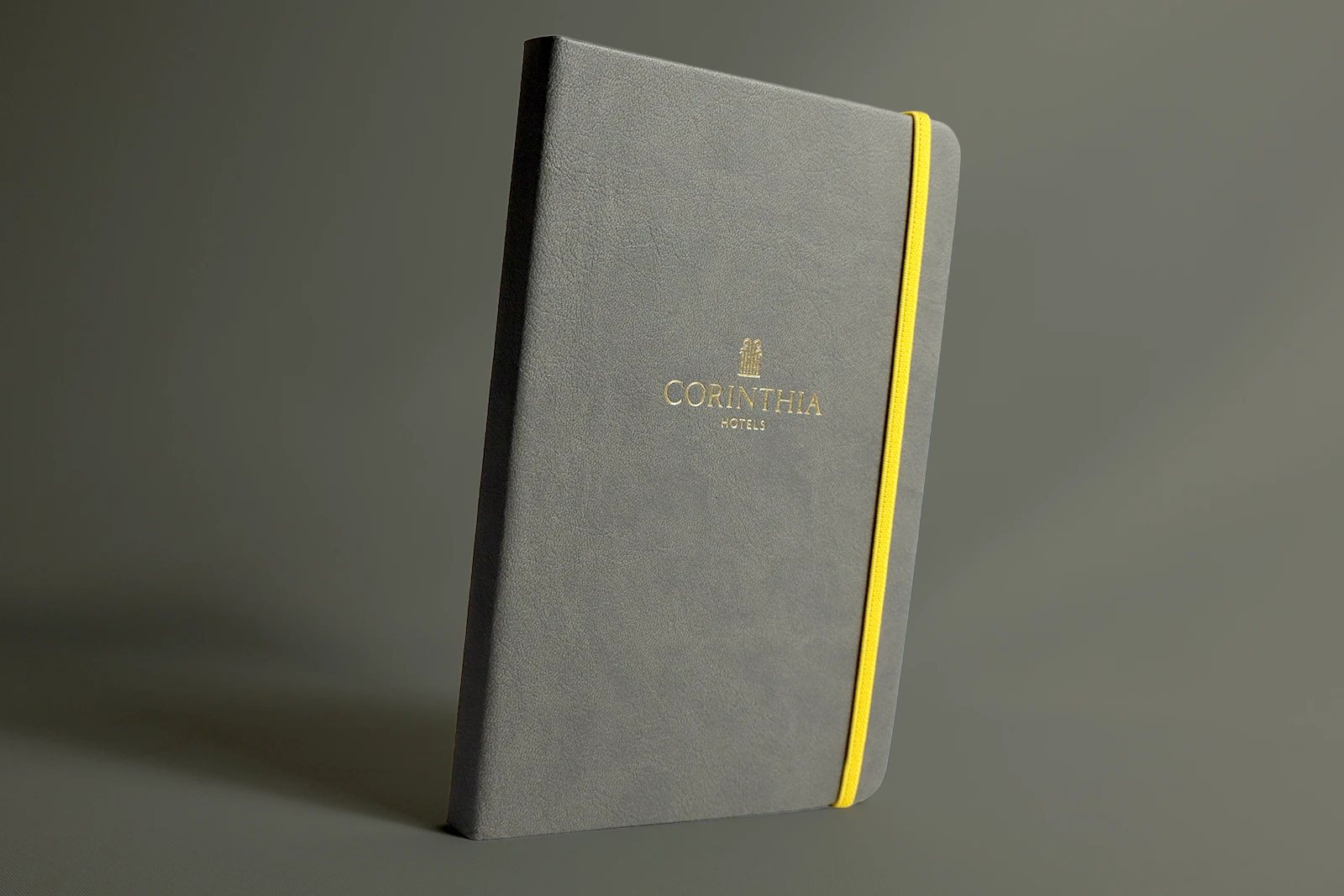
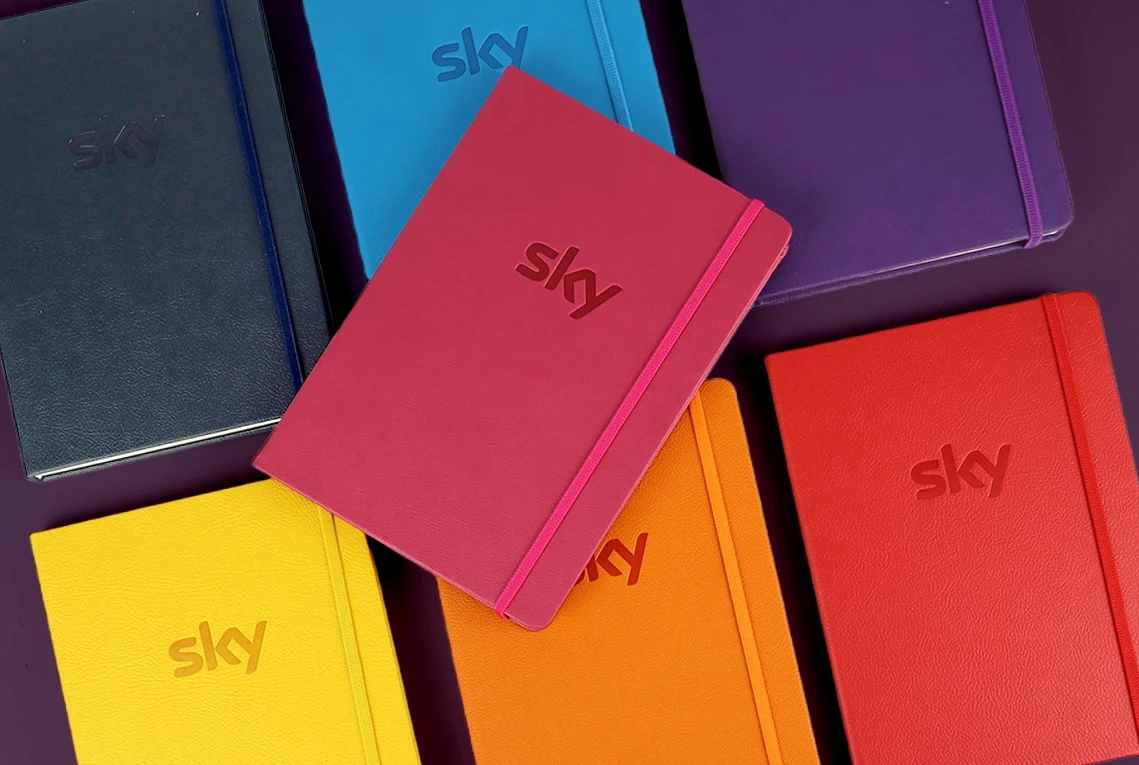
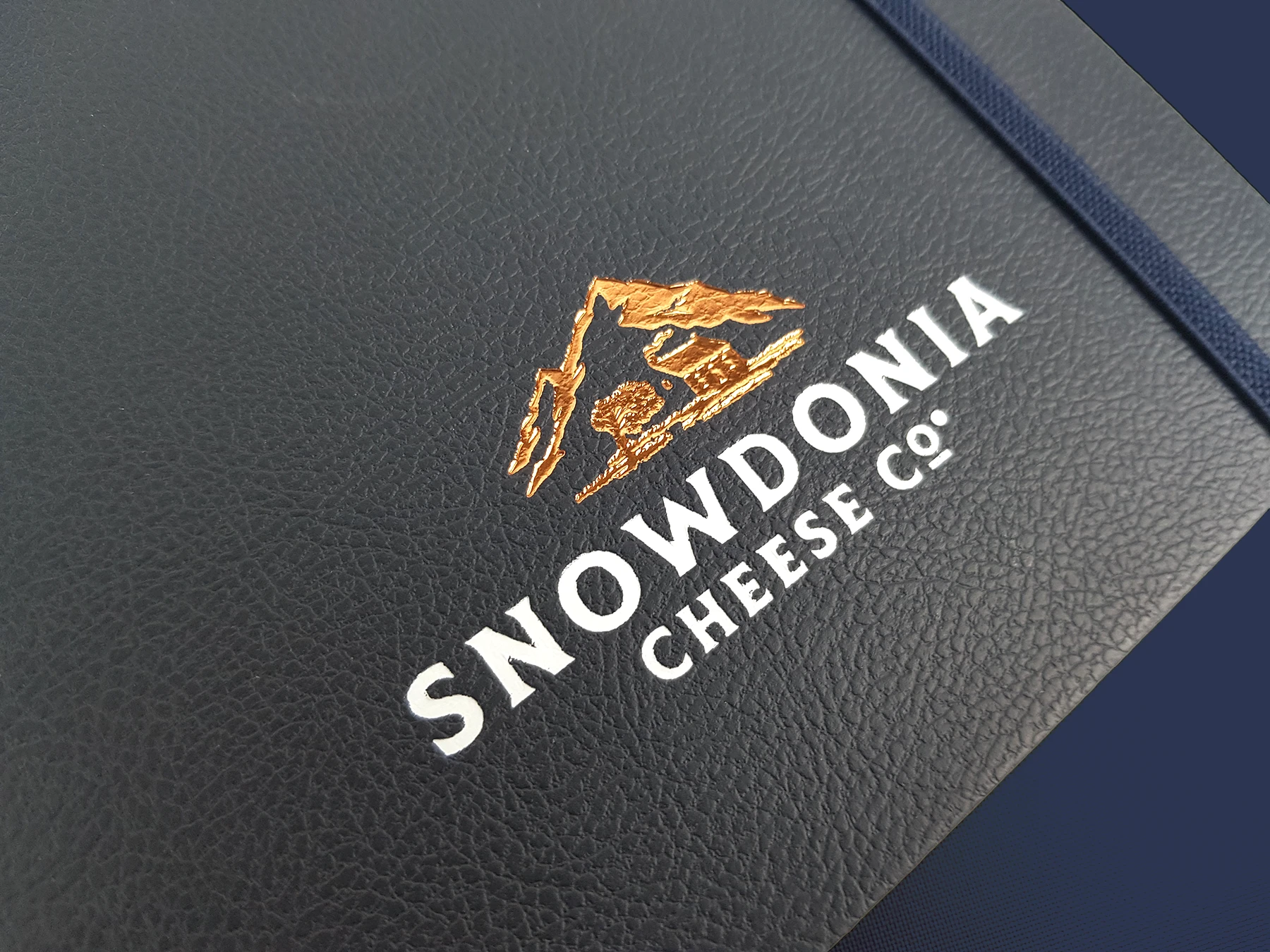
Need some inspiration? Take a look at some of our work below and get a feel for our bespoke products.

See for yourself
Wondering how you’ll look on our notebooks? Find out now! Fill out the details below and send us your chosen branding.
With you every step of the way

We receive your brief and start mocking up some designs for you.

Once completed we will send you your design proposal.
From that digital proposal we will mockup some designs of what your notebooks will look like.
Once you are happy with the designs, we can move forward with the order.
With the order complete, your products will be delivered to you by an accredited global courier.